Gabriel
Soul Guardian: A Hellishly Cozy FantasyGabriel is the archangelic commander of Heaven’s armies and one of the most dangerous powers in the setting. He embodies Heaven’s military authority: disciplined, intimidating, and impatient with insubordination, yet repeatedly drawn into conflicts where institutional duty collides with the unpredictable loyalties of individuals such as Bael and Zephyr.
Identity and Authority
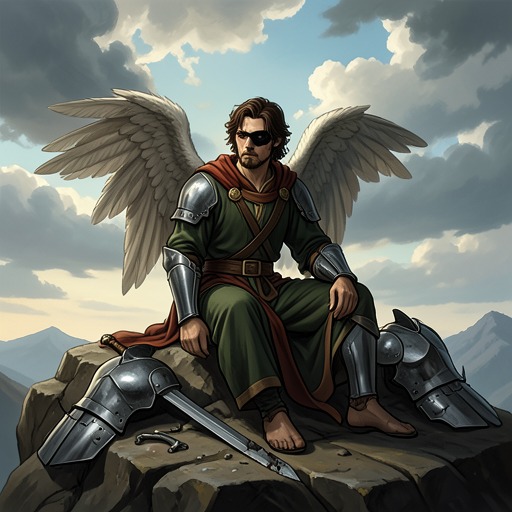
Gabriel belongs to the archangelic order rather than the ordinary ranks of Heaven. Bael’s memories distinguish regular angels, who are comparatively easy to kill, from archangels, whose battlefield power is overwhelming; confronting one is likened to attacking a tank with a flyswatter. Within that hierarchy, Gabriel commands Heaven’s armies, giving him both exceptional martial status and responsibility for responding to threats against Heaven’s interests.
His authority is also expressed through temperament. He is characterized by a perpetually scowling face and an abrasive manner, and the narration presents him as an all-around sourpuss rather than a serene or benevolent celestial figure. The contrast between his exalted office and his bad temper makes Heaven’s military structure feel less like an abstract sacred order than an institution staffed by powerful, difficult personalities.
Conflict with Zephyr
Gabriel’s command extends into the ordinary conduct of those under him. When Zephyr plays an acoustic guitar, Gabriel approaches from behind and causes the music to stop. Zephyr freezes because he does not want to face his boss, then defensively insists that it is only a song. Gabriel takes the instrument from his unresisting hands and examines its worn fretboard and fraying, much-loved sling before questioning whether Zephyr has maintained his equipment properly.
The scene reveals Gabriel’s priorities through a small disciplinary encounter rather than a battlefield. Zephyr is a gifted singer who usually serves as a second tenor in the angelic choir and possesses an unusually broad range because angelic physical forms are largely mutable. Gabriel, however, does not respond to the artistry or affection represented by the guitar. He sees an item belonging to a soldier and evaluates it as equipment. His scrutiny turns a personal musical moment into an assertion of command, showing how thoroughly military discipline governs his relationship with subordinates.
Strategic Pressure and the Coming War
Gabriel becomes especially important when the prospect of war intensifies. At the opening of Chapter sixty-one, he feels pressure settling over him because Metatron has been missing for days and his informants have learned nothing about Hell’s preparations. He knows that activity is taking place below, but cannot determine what it means. His anxiety is therefore not simple fear; it is the burden of command combined with an information failure. Heaven has power, but Gabriel lacks reliable knowledge of the enemy’s intentions.
That uncertainty places him at the center of the book’s larger struggle over prophecy, preparation, and control. The apocalypse has been scheduled for Christmas Day, with the participants even negotiating the time so that people can open their presents before the end of the world begins. Against that absurdly practical timetable, Gabriel’s military concern gives the looming catastrophe a harder strategic dimension. He must read Hell’s silence and activity while Heaven’s own leadership is unsettled by Metatron’s disappearance.
Opposition to Bael
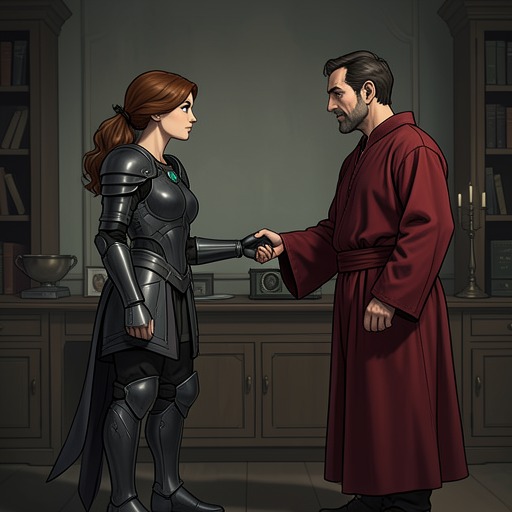
Gabriel’s relationship with Bael is defined by open hostility. Bael is a baron of Hell and lord of torment, while Gabriel commands the armies of Heaven, so their conflict is both personal and institutional: each represents a rival supernatural power, and each is capable of threatening the other directly. Bael’s recollection that archangels are death with wings establishes Gabriel as an adversary whom even a powerful demon cannot treat casually.
Their opposition becomes explicit during the later showdown. Gabriel lands and walks toward Bael while stating that Bael was right to send the witch away because Gabriel would have killed her first. The remark is not a negotiation or warning softened by diplomacy. It confirms that Gabriel sees the surrounding confrontation in lethal terms and that his immediate priority is eliminating opponents who might otherwise remain near Bael. His entrance converts a tense encounter into a direct contest between the commander of Heaven and the baron of Hell.
Faith, Order, and the Limits of Redemption
Gabriel’s institutional world is set against a more complicated religious landscape. Bael loves large, opulent churches precisely because he sees their blood, sweat, and tears as wasted on a deity who wants nothing to do with such excess. Ryan, an atheist, regards the old church as enemy territory and cannot understand how anyone could believe in its claims, suspecting that believers are merely pretending. These reactions expose a gap between sacred architecture, human faith, and the supernatural beings who supposedly stand behind religious doctrine.
The question of redemption further unsettles Gabriel’s side of the moral divide. Bael recognizes that Lucy may eventually betray him and fears that his hope for a favorable resolution has blinded him to the Devil’s nature. An elderly bishop, speaking while Gino possesses his failing body, argues that even the Devil is a child of God and may be redeemed. Gino’s own position is painfully paradoxical: he has forsaken Hell, yet Heaven may reject him because of rules and tradition. Against this background, Gabriel’s military authority represents a system in which allegiance and classification matter more readily than individual transformation. The story repeatedly tests whether celestial order can accommodate beings who do not remain in the categories assigned to them.
Narrative Role and Significance
Gabriel functions as a threshold guardian between the domestic, comic, and morally improvised world surrounding Bael and the formal violence of Heaven. His presence can make a guitar feel like contraband equipment, turn missing information into a military crisis, and transform a conversation into a showdown. He is not merely a symbol of goodness opposing evil; the evidence instead presents him as an agent of a powerful institution whose methods are severe and whose certainty is repeatedly challenged by prophecy, disappearance, betrayal, and the possibility of redemption.
His significance lies in that tension. Gabriel’s terrifying strength gives the celestial order credibility, but his scowling authoritarianism also makes that order look rigid and emotionally limited. He is most revealing when placed beside characters who resist fixed identities: Zephyr’s musical individuality, Bael’s attachment to those he protects, Lucy’s refusal to surrender her power, and Gino’s rejection of Hell despite Heaven’s unwillingness to receive him. As commander, Gabriel seeks to preserve boundaries between Heaven and Hell; the narrative’s recurring reversals show how unstable those boundaries become when personal bonds and moral choices cross them.